
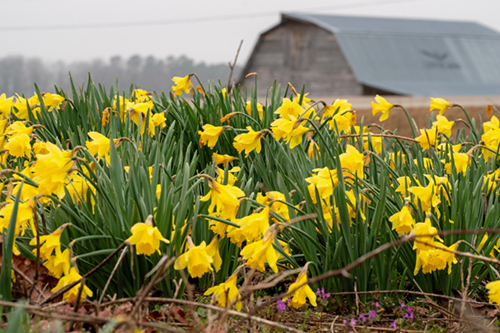
Jonquils in Bloom: A Sure Sign of
Spring in the Arkansas Ozarks
Every year across the hills and hollows of the Ozark Mountains, a
familiar splash of yellow begins to appear along roadsides, near fence lines,
and around old homesites. Here in north central Arkansas, blooming jonquils are
often the very first sign that winter is finally giving way to spring.
At United Country Ozark Realty, we spend a lot of time out on the
land—showing farms, timber tracts, hunting properties, and country homes. One
thing we notice every year is how jonquils pop up in places with a story behind
them. If you know what to look for, those bright flowers can even help reveal
the history of a property.
Why Jonquils Bloom First in the Ozarks
Jonquils, a type of daffodil belonging to the genus Narcissus, are
well-suited to the climate and soils found throughout the Ozarks. They are
hardy perennials that can withstand cold winters and quickly bloom once the
ground begins to warm.
In north central Arkansas, jonquils often bloom as early as late February
or early March depending on the weather. Their early arrival has made them a
traditional signal that spring is just around the corner—long before dogwoods
and redbuds begin to flower.
For longtime residents of the Ozarks, seeing jonquils:
- Signals the end of the coldest
part of winter
- Marks the start of gardening
season
- Means greener pastures are on the
way
- And reminds us that the
countryside is about to come back to life
Jonquils and the Hidden History of Old
Homesteads
One of the most interesting things about jonquils in the Ozarks is where
they tend to grow. Many of the clusters you see scattered across rural
properties today were originally planted decades—or even more than a
century—ago.
Early settlers in the Ozark region commonly planted jonquils around:
- Homes
- Wells
- Front walkways
- Yard edges and gardens
Because jonquils multiply naturally and can survive for generations
without much care, they often remain long after a house or barn has
disappeared. Today, a patch of blooming jonquils in the woods or pasture can
quietly mark where an old homestead once stood.
When we’re walking land with buyers, it’s not uncommon to spot a stand of
jonquils and realize we’re standing near a historic homesite. Sometimes you may
also find:
- Old stone foundations
- Hand-dug wells
- Old fence lines
- Mature shade trees like oaks or
cedars
These details can add character and historical charm to rural property.
Why This Matters When Looking at Land
in North Central Arkansas
For buyers searching for farms, hunting land, or country homes in the
Ozarks, signs like jonquils can offer clues about a property’s past. An old
homesite might mean:
- Previous clearing or usable
ground
- Access to older roads or trails
- Established soil that once
supported gardens or livestock
- Potential building sites with a
great view
Not every patch of jonquils marks a homesite, but it’s a neat piece of
local knowledge many longtime residents recognize.
Spring Is a Beautiful Time to View
Property in the Ozarks
Jonquil season is also one of the best times of year to get out and
explore land in north central Arkansas. The weather starts to warm, wildlife
becomes more active, and the landscape begins turning green again.
If you’ve been thinking about buying or selling rural property in the
Ozarks, spring is a great time to take a closer look. And if you notice a
bright patch of yellow flowers while walking a property, you might just be
looking at a piece of Ozark history.
At United Country Ozark Realty, we’re proud to help people find
land and homes across north central Arkansas—and sometimes the land tells its
own story.
Looking for farms, hunting land, country homes, or acreage in the
Arkansas Ozarks? Our team at United Country Ozark Realty is here to help you
explore the region and find the right property for your goals.