
The Home Inspection Process in
Northern Arkansas: A Guide for Buyers and Sellers
Buying or selling a home is a major financial decision, and the home
inspection is one of the most important steps between an accepted offer and
closing. A professional inspection helps buyers better understand a property’s
current condition while giving sellers an opportunity to address concerns and
keep the transaction moving forward.
For properties in northern Arkansas, an inspection may involve more than
evaluating the house itself. Many homes in the Ozark Mountains include private
wells, septic systems, crawl spaces, propane equipment, fireplaces,
wood-burning stoves, workshops, barns, acreage, and private roads.
Understanding what a standard home inspection covers—and what may require an
additional specialist—can help both parties prepare for the process.
What Is a Home Inspection?
A home inspection is a visual evaluation of the readily accessible
systems and components of a property. The inspector documents the condition of
the home at the time of the inspection and identifies visible defects, safety
concerns, maintenance issues, and areas that may require further evaluation.
A typical residential inspection may include:
- Foundation and visible structural
components
- Roof coverings, flashing,
gutters, and roof penetrations
- Exterior siding, doors, windows,
porches, decks, and steps
- Interior walls, ceilings, floors,
doors, and windows
- Electrical service, panels,
outlets, and visible wiring
- Plumbing supply lines, drains,
fixtures, and water heaters
- Heating and cooling equipment
- Attic insulation and ventilation
- Crawl spaces or basements when
accessible
- Built-in appliances
- Fireplaces, chimneys, and visible
venting components
A standard inspection is generally visual and noninvasive. Inspectors do
not normally open walls, move heavy furniture, remove flooring, dismantle
equipment, or guarantee how long a system will continue operating.
The inspection report is also not a warranty. It is a professional
evaluation of visible and accessible conditions on the day of the inspection.
Choosing a Home Inspector in Arkansas
Arkansas regulates individuals who perform home inspections for a fee.
Buyers should verify that the person they hire is currently registered with the
State of Arkansas.
When comparing inspectors, buyers may want to ask about:
- Current Arkansas registration
- Experience with rural and older
homes
- Familiarity with crawl spaces and
pier-and-beam foundations
- Availability within the
contract’s inspection period
- Whether detached garages,
workshops, barns, or other structures are included
- Whether additional services such
as radon testing are offered
- The format and expected delivery
time of the inspection report
- The inspector’s policy regarding
buyer attendance and follow-up questions
The buyer normally selects and pays the home inspector unless the
purchase contract provides otherwise.
The Home Inspection Process for Buyers
1. Review the Inspection Terms in the
Contract
Once an offer is accepted, the purchase contract usually establishes a
specific period during which the buyer may complete inspections and submit any
notices or repair requests.
These deadlines are important. Missing a contractual deadline could limit
the buyer’s options, so buyers should schedule the inspection promptly and
communicate closely with their real estate agent.
The exact rights of the buyer depend on the language of the signed
contract. Buyers should not assume they can automatically cancel the
transaction, require repairs, or renegotiate the price simply because an
inspection identifies a defect.
2. Schedule the Inspection Quickly
Inspectors can become busy during active real estate seasons. Rural
properties may also take longer to inspect, especially when they include
multiple structures or specialized systems.
Before scheduling, the buyer should confirm whether the inspection
includes:
- The primary residence
- Attached and detached garages
- Shops, barns, cabins, or guest
houses
- Crawl spaces and attics
- Installed appliances
- Fireplaces or wood-burning stoves
- Private water and wastewater
components
Additional fees may apply when a property has multiple buildings or
extensive square footage.
3. Attend the Inspection When Possible
Buyers are often encouraged to attend at least the final portion of the
inspection, provided the inspector and property owner permit it. This gives the
buyer an opportunity to see important findings, learn where major shutoffs are
located, and ask questions about maintenance.
An inspection can produce a long list of observations, particularly in an
older home. Seeing the property with the inspector may help the buyer
distinguish routine maintenance from more significant concerns.
4. Review the Entire Report
Inspection reports commonly include photographs, descriptions,
recommendations, and a list of items that were not accessible or inspected.
Buyers should read the full report rather than focusing only on a summary
page. They should pay close attention to:
- Safety concerns
- Active water intrusion
- Structural movement or damage
- Roof deterioration
- Electrical hazards
- Plumbing leaks
- Heating and cooling problems
- Wood decay or insect-related
damage
- Items requiring evaluation by a
licensed contractor or specialist
Not every item in a report is a major defect. Some findings are
maintenance recommendations, age-related wear, or improvements that may not
meet current construction practices but were acceptable when the home was
built.
5. Obtain Specialist Evaluations When
Needed
A home inspector may recommend further evaluation by a qualified
contractor, engineer, electrician, plumber, HVAC technician, roofer,
pest-control professional, or other specialist.
Buyers should try to obtain these evaluations before the inspection
period expires. A recommendation for additional evaluation is not the same as a
repair estimate, and waiting until after the deadline may reduce the buyer’s
available options.
6. Decide How to Proceed
Depending on the purchase contract and inspection findings, a buyer may
choose to:
- Accept the property in its
current condition
- Request specific repairs
- Request a financial concession or
price adjustment
- Ask for additional documentation
or specialist evaluations
- Exercise a contractual right to
terminate, when applicable
Repairs are generally negotiable unless the contract or financing program
requires a particular condition to be corrected. The seller may agree to all,
some, or none of the buyer’s requests.
Buyers should focus on significant defects, safety concerns, and
expensive systems rather than treating the inspection as an opportunity to make
an existing home completely new.
The Home Inspection Process for
Sellers
1. Prepare the Property for Access
The inspector needs reasonable access to the home’s major components.
Sellers can help prevent delays by making sure the following areas are
accessible:
- Electrical panels
- Water heaters
- Heating and cooling equipment
- Attic entrances
- Crawl-space entrances
- Plumbing under sinks
- Garages, shops, and outbuildings
included in the inspection
- Well houses, pressure tanks, and
water-treatment equipment
- Septic components when their
location is known
Pets should be safely secured or removed, and locked buildings should be
opened when they are part of the sale.
Utilities should normally remain connected so the inspector can operate
lights, plumbing fixtures, appliances, heating, and cooling equipment. Sellers
should discuss any winterization or utility concerns with their real estate
agent before the inspection.
2. Gather Property Records
Sellers can prepare copies of documents that may help answer questions
about the property, including:
- Roof replacement information
- HVAC installation and service
records
- Septic permits, pumping records,
or repair invoices
- Well records and water-test
results
- Termite treatment records or
warranties
- Foundation or structural repair
documentation
- Electrical and plumbing upgrade
records
- Building permits when available
- Appliance manuals and warranties
Documentation does not replace an inspection, but it can help buyers
understand when work was completed and who performed it.
3. Complete Disclosures Carefully
Arkansas does not require every individual seller to provide a
property-condition disclosure in every transaction. However, seller disclosure
forms are commonly used in residential real estate transactions.
When completing a disclosure, sellers should answer based on their actual
knowledge. They should avoid guessing, concealing known concerns, or making
promises about systems they cannot verify.
A seller disclosure is not a substitute for the buyer’s independent
inspections.
4. Expect the Inspector to Find
Something
Almost every home has items that could be repaired, maintained, or
improved. An inspection finding does not automatically mean the transaction
will fail.
Sellers should review any repair request with their real estate agent and
consider:
- The seriousness of the issue
- Whether the condition affects
safety or financing
- The estimated repair cost
- Whether additional evaluation is
needed
- The strength of the current
market
- Whether offering a credit may be
preferable to completing the work
If the seller agrees to repairs, the agreement should clearly identify
what will be completed, who may perform the work, and what receipts or
documentation must be provided.
Northern Arkansas Inspection
Considerations
Homes throughout Melbourne, Izard County, Baxter County, Fulton County,
Stone County, Independence County, and the surrounding Ozark region can have
features that require additional attention.
Private Wells
A standard home inspection may evaluate visible well equipment, but it
does not necessarily determine water quality, available water volume, well
depth, or long-term well performance.
Buyers may want to consider:
- A laboratory water-quality test
- Inspection of the well house,
pressure tank, pump, and visible piping
- Questions about well depth and
age
- Well-production or flow testing
when appropriate
- Testing for minerals or other
contaminants through a qualified laboratory
The Arkansas Department of Health offers testing for total coliform
bacteria and E. coli in private drinking-water samples. Additional testing for
minerals, chemicals, or other concerns may require a private environmental
laboratory.
Septic Systems
A general home inspection does not always include a complete septic
evaluation. Buyers should determine whether a separate inspection, pumping,
camera evaluation, or functional test is appropriate.
Important questions include:
- Where are the tank and drain
field located?
- Is a permit or system design
available?
- When was the tank last pumped?
- Are there signs of sewage odors,
slow drains, standing water, or saturated soil?
- Is the system appropriately
designed for the home’s number of bedrooms?
- Are additions, driveways, barns,
or other improvements located over the system?
Copies of septic permits may be available through the county health
unit’s Onsite Environmental Specialist.
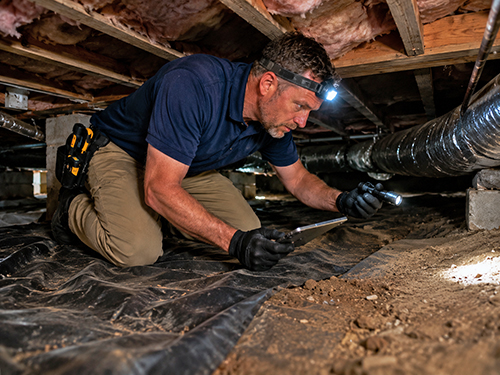
Crawl Spaces and Moisture
Crawl spaces are common in northern Arkansas homes. Buyers should pay
attention to drainage, standing water, wood decay, damaged insulation, plumbing
leaks, ventilation, vapor barriers, pest activity, and signs of previous
repairs.
The region’s wooded terrain, rainfall, slopes, and shaded building sites
can make water management especially important. Gutters, downspouts, grading,
retaining walls, and drainage paths should direct water away from the
foundation.
Visible mold or fungal growth may indicate an underlying moisture
problem. Addressing the source of moisture is generally more important than
simply identifying the type of mold.
Termites and Other Wood-Destroying
Insects
A standard home inspection is not always the same as a wood-destroying
insect inspection. A separate termite or wood-destroying insect report may be
recommended or required by the buyer’s lender.
Inspectors and pest professionals may look for:
- Mud tubes
- Damaged or hollow-sounding wood
- Excessive moisture
- Wood-to-soil contact
- Previous treatment evidence
- Damaged floor joists or sill
plates
- Conditions that may attract
wood-destroying insects
Past termite treatment does not necessarily mean there is active damage,
but buyers should review available treatment records and warranties.
Roofs, Storms, and Tree Coverage
Northern Arkansas properties are often surrounded by mature trees. Buyers
should evaluate the roof for age, storm damage, worn shingles, flashing
concerns, moss or organic buildup, damaged gutters, and overhanging limbs.
A home inspector may recommend a roofer when the roof is steep, wet,
covered, inaccessible, or appears damaged.
Fireplaces, Chimneys, Wood Stoves, and
Propane
Many Ozark homes use fireplaces, wood-burning stoves, ventless gas
heaters, or propane systems. A general inspection may identify visible
concerns, but a chimney sweep, fireplace specialist, propane supplier, or HVAC
technician may be needed for a more complete evaluation.
Buyers should understand:
- The appliance’s fuel source
- The location and ownership of the
propane tank
- Venting and clearance
requirements
- Chimney condition
- Available service or cleaning
records
- Whether the appliance is the
primary or supplemental heat source
Older Homes and Lead-Based Paint
For most residential properties built before 1978, federal rules require
sellers to disclose known information about lead-based paint and provide
required lead-related information to buyers.
A normal home inspection does not confirm whether lead-based paint is
present. Buyers who have concerns may request a separate lead inspection or
risk assessment during the applicable period.
Radon Testing
Radon cannot be seen or smelled and is not identified through a visual
home inspection. Testing is the only way to determine the radon level in an
individual home.
The Environmental Protection Agency recommends testing homes regardless
of the county’s mapped radon zone. Buyers may arrange short-term testing during
the inspection period or request information about previous test results.
Manufactured and Modular Homes
Northern Arkansas has many manufactured and modular homes. Buyers may
need evaluations beyond a standard residential inspection, including:
- Foundation and anchoring systems
- Additions that may not be
independently supported
- Marriage-line connections
- Under-home plumbing and ductwork
- Skirting and ventilation
- Data plates, certification
labels, and title information
- Lender-required engineering
certifications
Financing requirements can vary, so buyers should speak with their lender
early in the transaction.
Acreage, Outbuildings, and Property
Access
A residential home inspection generally does not determine boundary
lines, acreage, easements, road ownership, zoning, mineral rights, flood-zone
status, or whether a driveway provides legal access.
Buyers of rural property may also need:
- A boundary survey
- Title and easement review
- Flood-zone research
- Inspection of barns, shops,
fences, and livestock facilities
- Evaluation of private roads,
bridges, culverts, and creek crossings
- Confirmation of utility locations
and internet availability
These matters should be investigated separately from the home inspection.
Home Inspection, Appraisal, and Final
Walk-Through: What Is the Difference?
These three steps serve different purposes.
A home inspection evaluates the visible condition of the home for
the buyer.
An appraisal is primarily performed for the lender to develop an
opinion of value and determine whether the property meets applicable lending
requirements. An appraisal should not be treated as a replacement for a home
inspection.
A final walk-through normally takes place shortly before closing.
It allows the buyer to confirm that the property remains in the expected
condition, agreed-upon repairs appear complete, and included items have not
been removed. It is not a second full inspection.
Tips for a Smoother Inspection and
Repair Process
For buyers:
- Schedule inspections immediately
after contract acceptance
- Verify the inspector’s Arkansas
registration
- Read the complete inspection
agreement and report
- Ask questions when findings are
unclear
- Obtain specialist evaluations
before contractual deadlines
- Keep repair requests focused and
supported by the report
- Confirm lender requirements for
wells, septic systems, termites, and manufactured homes
For sellers:
- Provide access to all agreed-upon
areas
- Keep utilities connected and
pilot lights operating when appropriate
- Secure pets and remove obstacles
- Locate records for major repairs
and improvements
- Avoid hiding defects or making
rushed cosmetic repairs
- Use qualified professionals for
agreed-upon work
- Retain invoices, receipts, and
warranties
Local Guidance Through the Inspection
Process
The inspection process can feel overwhelming, but experienced real estate
guidance can help buyers and sellers understand the timeline, communicate
effectively, and keep the transaction moving toward closing.
Real estate agents do not replace inspectors, engineers, contractors,
attorneys, or other specialists. Their role is to help clients understand the
transaction process, follow contract deadlines, communicate inspection-related
decisions, and coordinate with the appropriate professionals.
United Country Ozark Realty serves buyers and sellers throughout
Melbourne, Izard County, and the surrounding northern Arkansas Ozarks. Whether
you are purchasing a home in town, selling a rural property, or considering a
house with acreage, a private well, or a septic system, our team is ready to
help guide you from offer to closing.
Contact United Country Ozark Realty in Melbourne, Arkansas, at 870-368-4155
for assistance buying or selling real estate in northern Arkansas.
This article is intended for general informational purposes and is not
legal, engineering, environmental, lending, or inspection advice. Inspection
rights, deadlines, repair obligations, and termination options are controlled
by the signed real estate contract and the circumstances of the individual
transaction.